Sunday, 14 April 2013

Seo Young Deok

I find, generally, that artist or creative people like to make art but resourceful and recycling the materials which are around them, just like this artist has. The use of chains and reusing matterials which may not be broken in anyway is a way which I really like, and already do in my work. So this idea and technique is defornately a way which I will carry on using in my work.
http://www.zuzafun.com/bike-chain-art-seo-young-deok

I am going to take the idea of being resourceful of old unuseful objects and truning them in to art. So i am goin to use bottle tops as a source and make the ghuman figure but noit as detailed as a general shape.

Korean artist Seo Young Deok uses exclusively upcycled materials – bike chains to be more specific – to create his designs. He used welded metal chains to link the human figures together piece by piece.

bike chain art seo young deok 1

bike chain art seo young deok 2

bike chain art seo young deok 4

bike chain art seo young deok 5

bike chain art seo young deok 6

bike chain art seo young deok 7


Thursday, 11 April 2013

Half Man\ Half Nature Collages

I really like this work as straight away it shows that art just doesnt have boundaries, and that  if you have any idea it's possible to make it. But the way they have done it really puzzles me, but  I use this aspect and experimentation in my work of putting together photography and 3d work. Its very vibrant attractive work and like to achieve that with mine.
http://www.mymodernmet.com/profiles/blogs/stunning-half-man-half-nature-collages


Los Angeles-based artist Alexandra Bellissimo has created some amazing collages using the human body and nature. As a conceptual photographer, Bellissimo creates work revolving around "making" pictures instead of simply taking them. Love the surreal nature to these black and white photo manipulations.

"Through the use of juxtaposition between nature and the human figure, my photo collages evoke a variety of human emotions such as anxiety, tranquility, and confinement," Bellissimo tells us. "With this unification of people and nature, the collages act as a surreal interpretation of these emotions in order to create a cohesive visual image where they coexist.

"I originally experimented with the concept of merging the human form and nature through digital manipulation. The idea of physically collaging the photographs came afterward, when I decided to approach the body of work through a more organic approach. Through this use of manipulating the environment and the subject, I seek to the challenge the expectations of the viewer to perceive new, mysterious imagery that otherwise would not exist."


Tuesday, 9 April 2013

Visit to Manchester...


Manchester City Art Gallery
http://www.museum.manchester.ac.uk/


Anthony gormley this is defornately a way of working which I am going to tryout, its very sturdy and unusual, and a new aspect of viewing creative and imaginative art. I enjoy looking at art that had a resembleance to everyday life.


My trousers (Prototype)

Made by Assa Ashuach 2003

Levi’s 501 jeans with plywood and rubber frame.


The deceptively ordinary looking My trousers are much more than an ordinary pair of jeans; when wearer bends in to a sitting position an internal frame locks the trousers into place, making the sitter seem to float magically in mid air.

  Ashuach developed the trousers as a student project, pursuing his interest in designing products that solve everyday problems and situations.

This was a new way working which I may not be able to experiment with at college as these arent materials which are aloud to use aswell as being safe. So im going to adapt around that problem any may be make expand on how else I cann make an object like that with different mediums so I can use this artist in  my work.


The Theatre of life
Made by Andy Hazell 2004
Wardrobes with printed tin plate scenes
Andy Hazell is renowned for his animated sculptures. In these witty domestic scenes of everyday life, he makes ordinary lives appear extraordinary. Every day we choose props to play out our lives; selecting a variety of objects ton set the scene, and assist us in delivering our daily scripts. Many museum pieces were in peoples’ homes.


Pulse index 2010

Rafeal Lozno-Hemmer

Plasma screen, computer, usb microscope, metal exclosure, custom software

Pulse index is part of a series of electric works by the Mexican-Canadian artist, Rafeal Lozano-Hemmer, which are created through the interaction of the audience. This piece relates to the use of photography for security and identification; from passport photos to modern iris scans. The user inserts their index finger in to the scanning device which records the image of their fingerprint whilst simultaneously taking a pulse reading which briefly appears on screen as the visitor interacts with the work. A collage of 509 images of the prints of each user is created as each succeeding image is added and all the information is compiled in to a database. The work explores themes of identity, surveillance and mortality in ways which strongly relate to other more conventional photographic works in this display.


Navel 1994

Helen Robertson b.1959

Black and white photography mounted on aluminium.

Robertson work started with the phrase contemplating one’s own navel’. She writes, ‘ I was interested in the fluidity and instability of this image, its lightness and weight and how, without the overt feature of the navel the piece was almost imageless’. Robertson, like John Coplans, play with how enlargement to over life size and the use of overexposure can alter how we perceive the body, rendering it abstract and sculptural.

I found this work thought proviking but effective, an simple. I can use with along with other artists work to make my own work take the same effect.


  In the house of my father 1997
Donald Rodney 1961-1998
Photographic print on aluminium, Photography taken by Andra Nelki.

In Rodney’s outstretched hand is a tiny model house pieced together from sections of his own skin removed from his body during treatment for sickle cell anaemia. The house is a metaphor for the place where we feel safe  and ‘at home’ but for the artist his fatal illness made him feel vulnerable in his own skin. It was one of the last works he made.

 Rodney’s work usually dealt with larger social and political subjects relating to the position of a black man in white British Society but this work is more intimate and personal. It is a poignant image of the fragility of existence.


Manchester Museum (The University of Manchester)
http://www.museum.manchester.ac.uk/


HUMANS


Humans aren’t separate from nature, we are connected to other animals through our shared ancestors.  This makes us like one huge family. Our closest living relatives- like distant cousins- are chimpanzees and other apes. Fossils have been discovered that show how people developed from other animals over millions of years, how they evolved. We have the most complicated brains known to exist, making us uniquely able to understand and appreciate the world around us.


This work is very different to the way I would work, but I still like the idea od how they show from the inside the way we came to the way we are. its very interesting to look at but I could use the message through history in my work and that the human figure isnt just about how it looks from the inside that keeps you going.

Sunday, 7 April 2013

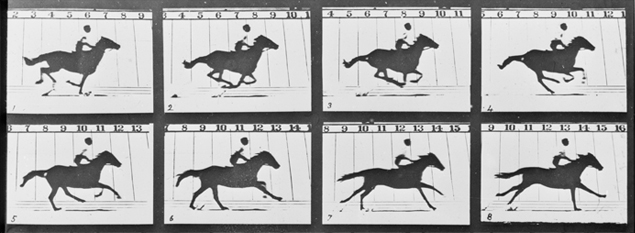
Eadweard Muybridge

Lucy Mutch - The Horse in Motion © Kingston Museum and Heritage Service, 2010


I researched Eadweard Muybridge as my initial idea was to show movement, but as i moved forward in my work i moved away from movement and looked at the human figure instead. But i could always use the techniques of the continuous shooting to show stages in a movement based on the human figure. A personal decision is that i don't like to close off doors or ways of working too soon before experimenting with all possibilities.
http://www.eadweardmuybridge.co.uk/
http://www.muybridge.org/

Eadwaerd Muybridge is a massive inspiraion to as riding is a great influence to me but beside that the still motion showing through the stages of a moving object is extremely original I could greatly use this in my work such as makiing a flip book it shows the steps very easily and how to come across starting putting a moving motion on to a 2d object.


 5 - Vol 1 - Plate 6

Eadweard Muybridge was born in Kingston upon Thames in 1830 but moved away in 1852 to make his fortune in America. He came back to live in Kingston in the 1890s and when he died in 1904, he bequeathed his equipment and prints to Kingston Museum. These pages below are designed to give you an insight into the Kingston Museum Collection.
http://www.kingston.gov.uk/museum/muybridge/

Eadweard Muybridge Tate Britain exhibition banner


http://www.tate.org.uk/whats-on/tate-britain/exhibition/eadweard-muybridge


Alberto Giacometti


 I looked at Giacomettis ways of drawing prier to attending a life drawing class 6-9 on a thursday night.  I wasnt to keen on the way he worked and the way he used the materials that he did but it gave me an insight on how i could work when life drawing.
As shown on blog at a earlier date i like the isolated and out of proportion figures. Just like

Mario Armengol's http://www.thatartistwoman.org/2010/09/figure-sculptural-project.html   http://www.marioarmengol.com/ and Sot's Art-Leonid Sokov.

As you can gather this way of long isolated figures made out of brass but as i don't have access to brass so i would have to improvise on the medium and make it out of a different medium.

I think Giacometti's way of working is ways which I could tryout as it has lots of texture, long expressive brushstrokes and then worked into with detail in a different medium, which shows contract between the materials he uses in his work.

Alberto Giacometti 1901–1966


Artist biography

Alberto Giacometti 1901-1966School of Paris sculptor, painter and draughtsman born in the village of Borgonovo near Stampa, Switzerland, son of the Post-Impressionist painter Giovanni Giacometti. Began to draw, paint and sculpt at an early age. Studied at the Ecole des Beaux-Arts in Geneva 1919-20 and in Italy 1920-1. Moved in 1922 to Paris where he first studied in Archipenko's studio, then for five years at the Académie de la Grande Chaumière under Bourdelle. First one-man exhibition at the Galerie Aktuaryus, Zurich, 1927. Went through a period of intense restlessness in which he experimented with polychrome sculpture, cages, erotic kinetic objects, near-abstraction and other styles. Participated in the Surrealist movement 1930-5. Began in 1934-5 to work again from the model, but each sculpture became smaller and smaller, and was finally almost always destroyed; had no exhibition between 1935 and 1947. Lived 1941-5 in Geneva, then returned to Paris. His characteristic style dates from 1947 when he started to make figures which were very tall and thin. Awarded the First Prize for Sculpture at the Pittsburgh International in 1961, the main prize for sculpture at the Venice Biennale 1962, and the Guggenheim International Award for Painting 1964. Died at Chur in Switzerland.

http://www.tate.org.uk/art/artists/alberto-giacometti-1159


Fernand Leger

Le Ballet Mécanique 1924
A pulsing, kaleidoscope of images set to an energetic soundtrack. A young women swings in a garden; a woman's face smiles. The rest is spinning cylinders, pistons, gears and turbines, kitchen objects in concentric circles or rows - pots, pan lids, and funnels, cars passing overhead, a spinning carnival ride. Over and over, a heavy-set woman climbs stairs carrying a large bag on her shoulder. An Art Deco cartoon figure appears, dancing. This is a world in motion, dominated by mechanical and repetitive images, with a few moments of solitude in a garden.

I have looked at film as id like to think I could have it as a possibility to use it in my Final Piece. Its a tecnique I dont have much knowledge in, and would be able to leave this course with some understanding and achievement of making good use of the facialities which are on offer for me. Also it maybe a medium which is very inspiring and it could be something I could achieve outside of the studio, but with the same tecniques and equipment which you use in the studio.


I was considering using film is my work as it was a possibility as we have the facilities and was suggested to me in my pitch. As i don't have much knowledge in this area of working and only know basics such as scratch film and how to use a digital camera not a film camera. I came to the decision to put media aside, but not rule it out totally and still have it as a possibility if needs be at a later date.

Getting started

I have decided to begin my work with primary research drawing the people around me, and produce a drypoint and a lino print. Then from this I will see who influences me and how I can use there way of working in my work.
Drypoint printing;
In drypoint the surface of the plate is scratched, gouged, punctured, scraped or abraded, but the material itself is not removed, it is just pushed to the side, forming a kind of curl. Thus the lines will present a metal burr which, when looked at through a magnifying glass, shows up as a kind of broken metallic wave, like the ridges of a ploughed field.It is this 'burr' which holds the ink, and gives a drypoint line, or area, its typical velvety appearance. I will use these techniques in my work to show the movement in an image, so it shows depth.
Mary collett
http://www.linoprints.co.uk/


Lino Printing; Lino Printing or Lino Cutting as it is also known is a block printing technique. Lino printing is quite a simple process. It is a great way to introduce children to the art of printmaking. Lino Printing is a popular print making technique using by many professional artists. Lino printing was originally held in low esteem by the art world until Pablo Picasso made a series of lino prints in the 1950s
Paul Niemiec
http://www.paulniemiec.com/etchings-dry-points-1-1.shtml

Thursday, 4 April 2013

Life Drawing

Life drawing can be found in my sketchbook.

Over the holidays...

* Sort out my journal
-keep up to date and my plan also the computer plan
*sort out and start developing work in my sketchbook
- draw people around me
-refer to artist research
*start writting my proposal
*Change and improve my blog as its very poor.
-artist research WHY?
-put my brainstorms on my blog so its understandable what im doing
- correct and check through make sure there isnt any mistakes.

peer feedback

A student on our course called Alice Salad gave me some feedback on how to improve my blog.

My blog;
 you need to explain WHY you have chosen to do human figures. cant be just because you like it. really think about why
sort your artist research out, make it more clear and take that massive list of artists off cus it makes it difficult to read and boring. make a quick list of media you want to use, ideas of final piece. your blogs a bit messy atm. and only put on things that are relevant otherwise its gunna be harder for you to think of ideas. xxxxx
for artist research dont copy things off internet unless you have read the info and its relevent. explain why you like the artist and how it relates to you and your work. the examiner and tutors already know about the artists background. if youre gunna get info off internet only put what media they use, the explanation- i.e what the art work is about and how they thought of it/got there. watch videos and documentaries about the artist and it will help you to understand more and give you ideas. i watched 2 documentaries this week and they have helped me and given me ideas about my own work and the meaning behind it ..i sound like a teacher haha! hope this helps. and this is my fmp blog: http://alicesagarfmp.blogspot.co.uk/ xxx


An Idea:
why dont you take photographs of people and their movement, then strip it down to one line drawing that looks interesting enough and then create a wire sculpture of the drawing? x


 So from this feedback i am going to change my blog as it doesnt show much understanding, or research its just poor. I am going to view other people blogs for an idea on what i need to do on my blog to improve it:
alicesagarfmp.blogspot.co.uk
srhsmth@tumblr.com
jesseyelouise.blogspot.co.uk
foziaiqbal2.blogspot.co.uk
Here are screenshots of before I changed my blog, as it shows it to be very poor;


Tuesday, 2 April 2013

Rachel Ducker

Rachel Ducker wire sculpture

http://www.rachelducker.co.uk/
I am yet again finding wire sculptures which are inspiring me the work isnt in great detail, but is to a standard of ellegance and makes an impression on me and the use of her wire tecnique and ideas.

British contemporary artist, Rachel Ducker was originally trained as a jeweller. With an insatiable desire to create she turned her attention to sculpting the human form in wire, concentrating on the expressive and emotional dynamics of human nature.


Rachel Ducker wire sculpture


Untitled by Rachel Ducker

My Pitch

From the vibe of other students and how their own pitches went, it didnt seem promising. I went in my pitch feeling very nervous but I was trying to be possitive. It went brilliantly, I explained I wanted to do the human Figure in many ways but not too sure yet, So they advised me to go away and find some more research which may influence me, which will get me started. To go and visit some art galleries see how artists have used the Human Figure in their own work and gather some primary research.